"We're always waiting on something"
Chapter 5 of 7 from the guide "Turn Your Shop Into a Business That Can Run Without You"
The cabinets are done. The hardware isn't here.
Or the finish is backordered. Or somebody just realized the special drawer slides were never ordered.
Now the job sits, the crew works around it, and someone's on the phone trying to find slides.
Half the time the problem isn't that it wasn't ordered. It's that nobody knows if it was. Or when it's coming. Or which job it's for.
Purchasing turns into a string of emergencies.
Here's the shift.
Materials get figured out when the job is planned, not when somebody reaches for the part.
How you can get there
When a job is planned, list what it needs. Mark what's already on the shelf.
For everything else, write down the vendor, the date you need it by, and whether it's been ordered.
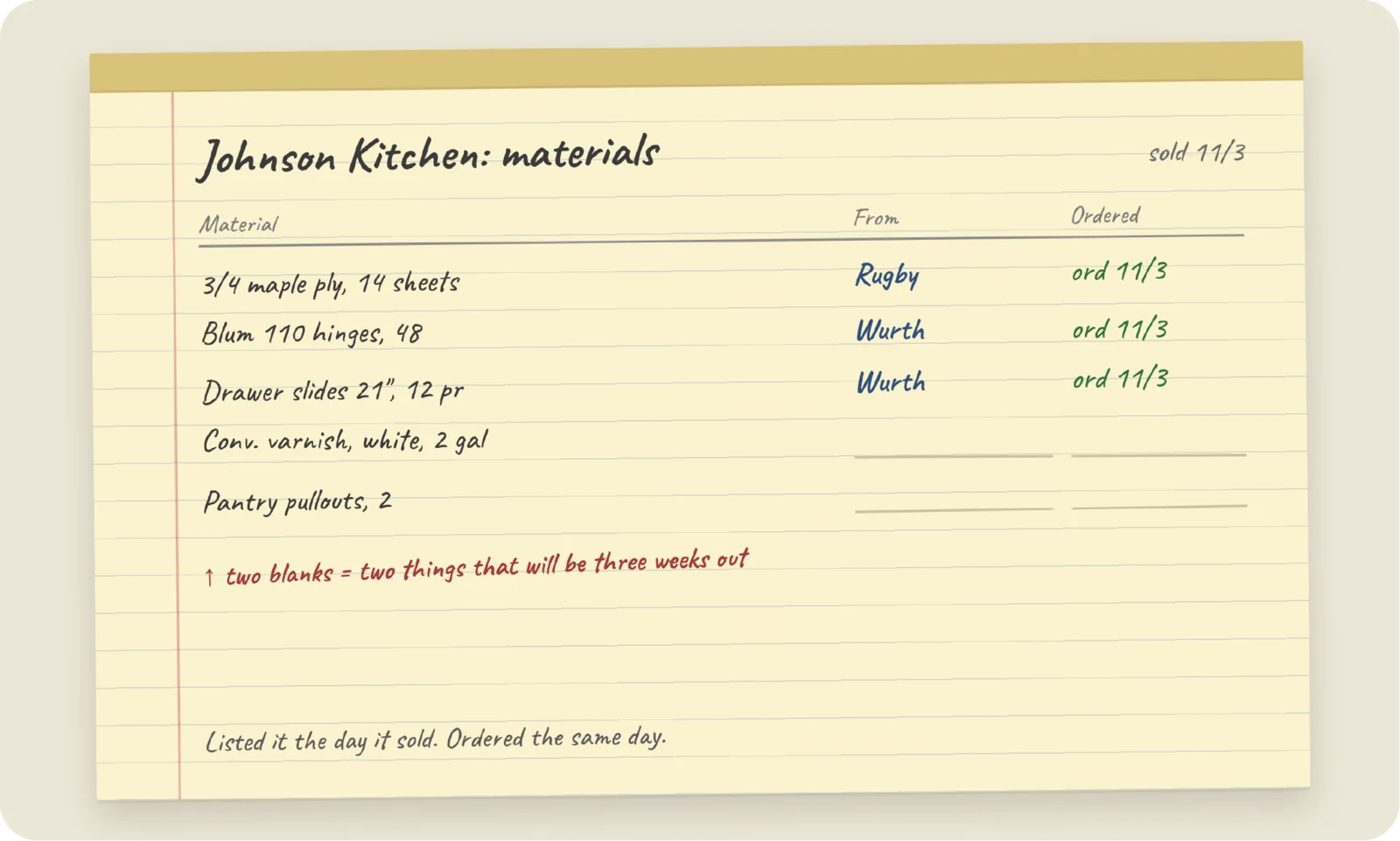
Go through the list every week, especially for jobs about to hit production.
Don't wait until somebody reaches for a part to find out it isn't there.
A simple list prevents most of these delays. If it's kept current. If somebody looks at it.
The trouble is the list is for one job, the hinge order is for four jobs, and the list in the office doesn't know what showed up at the dock.
The Maestro way
Every job has Needed Materials.
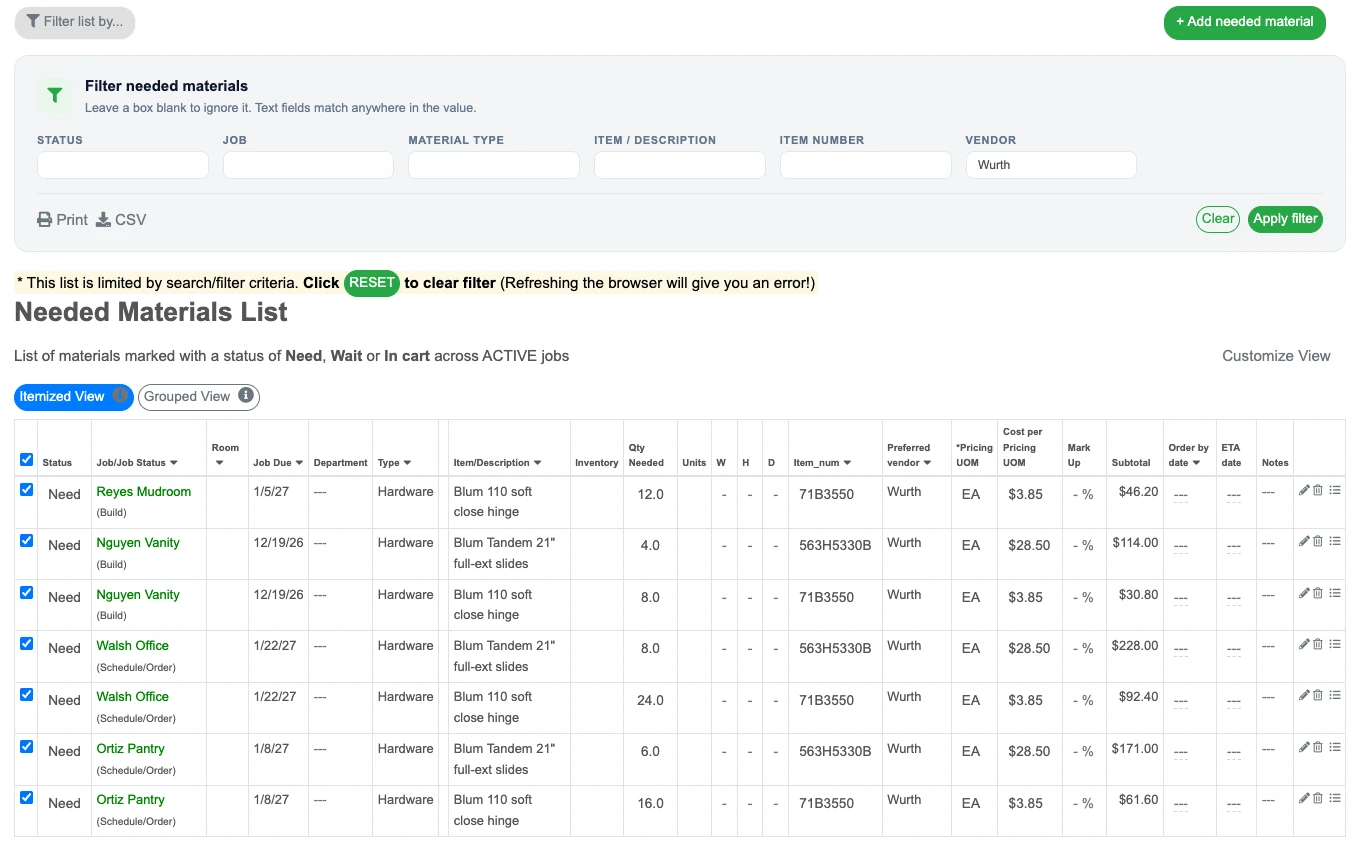
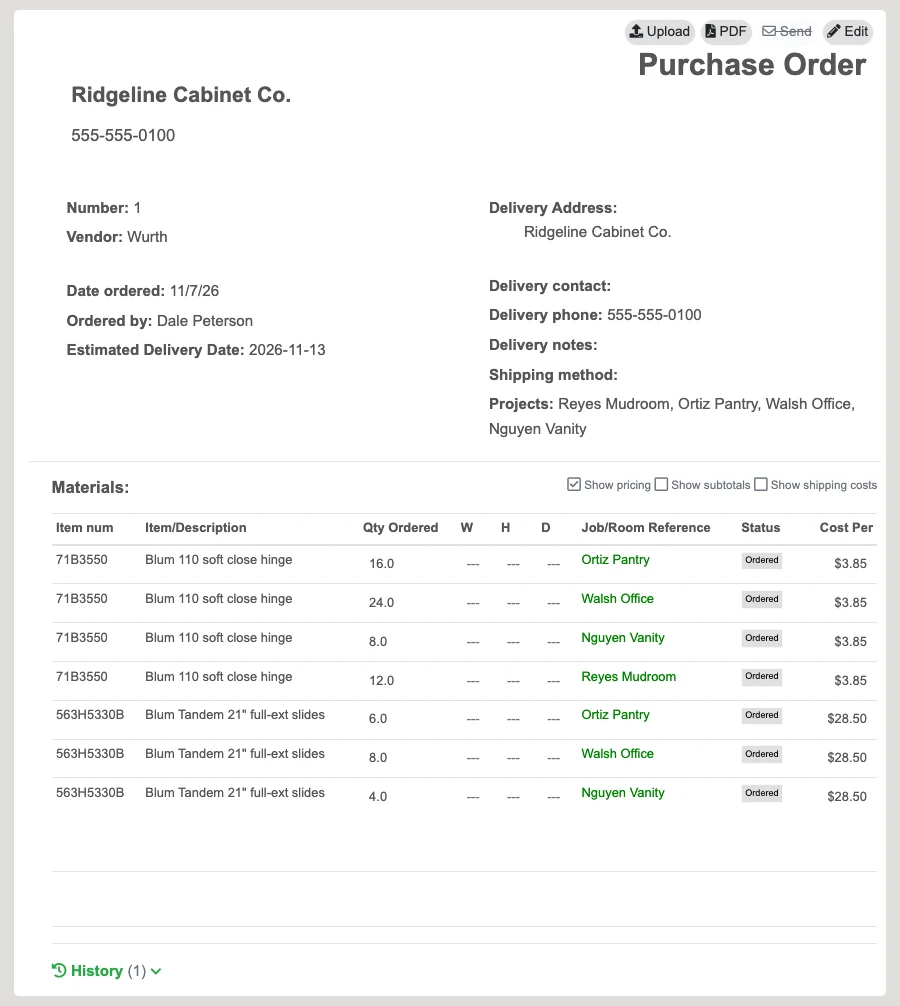
Tie them to vendors and roll them into purchase orders, including one PO that covers items for several jobs.
As orders go out and come in, the status updates. A partial delivery gets recorded as partial, not as done.
The office sees what's needed, what's ordered, and what's still out.
Purchasing gets handled before it stops production, not after.
The result
Purchasing is planned instead of reactive.
Materials are far more likely to be there when the crew needs them. Open orders are easy to chase. The crew keeps building instead of waiting.
Credit card required. Nothing is charged for 14 days. Cancel before then and you owe nothing. On day 15 your plan starts at $199 a month.