"We're always scrambling to meet deadlines"
Chapter 4 of 7 from the guide "Turn Your Shop Into a Business That Can Run Without You"
Every job comes with a date.
The customer has an install date. The contractor has other trades lined up behind you. And the shop has six other jobs moving through at the same time.
Somehow they all need to be done at once.
A job runs long. Material shows up late. The customer changes something. Another install gets moved up.
When you schedule one job at a time, you can't see what one change does to the rest. You find out when the deadline is a week away.
Here's the shift.
Stop looking at due dates. Look at the workload.
Not when each job is due, but when each job is in each stage, and what else is in that stage at the same time.
How you can get there
Take a sheet of paper. Weeks across the top. Jobs down the side.
For each job, mark the weeks it's in design, in production, in finish, and at install. Use whatever stages your shop actually uses.
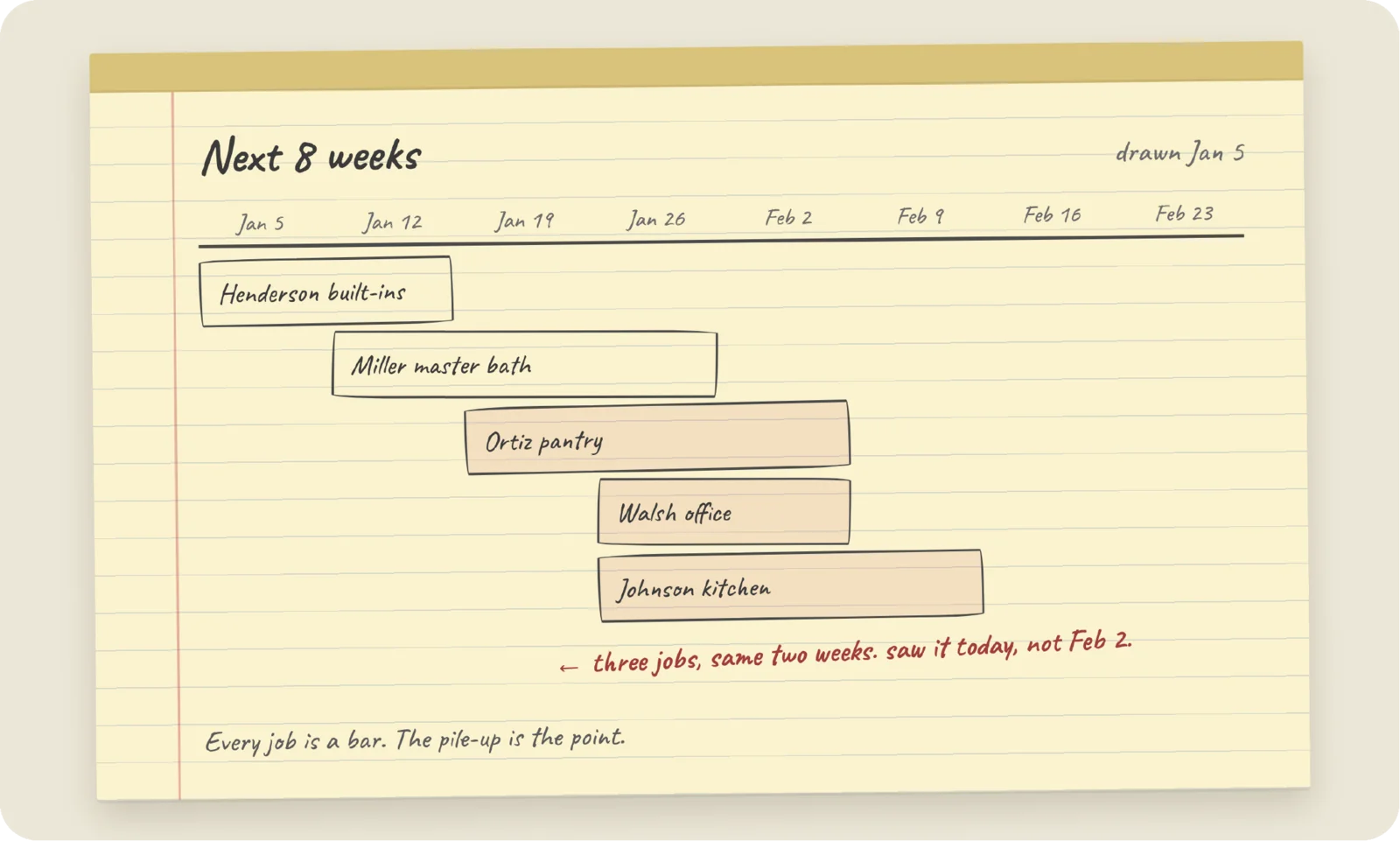
Now look at it as a whole.
Three jobs in the finish room the same week? Install stacked at the end of the month? More production scheduled than the crew can get through?
Look at it every week and move things as they change.
The earlier you see the pile-up, the more ways you have to fix it.
The trouble is paper doesn't move, so every change means an eraser. And it's one more sheet somebody has to keep current.
The Maestro way
Timelines are that sheet, on a screen.
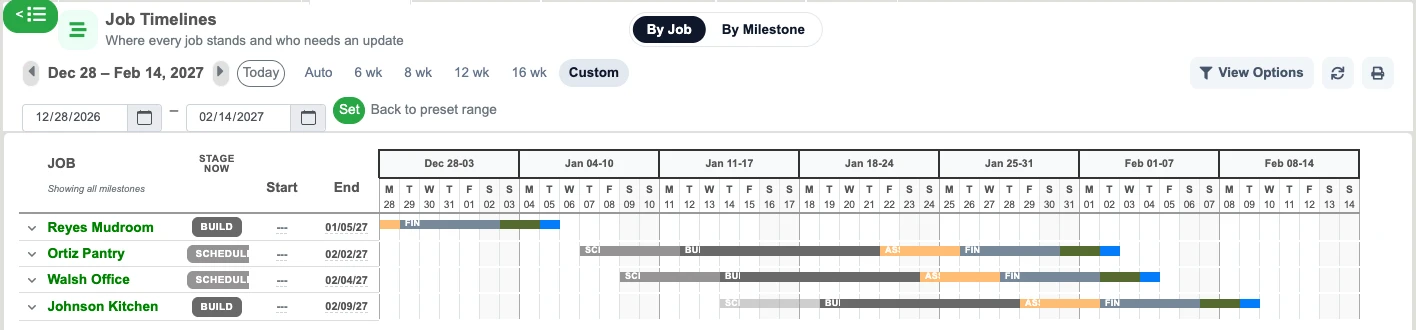
Set up default timelines for how your shop typically runs a job. Schedule a new job forward from a start date or backward from the install date, and the stages fall into place.
Look across all the jobs and the overlaps show themselves.
When something changes, slide the stage. You don't rebuild the plan.
It won't predict every delay. It makes the workload visible so you see it coming.
The result
You see the busy weeks before they arrive.
Adjust earlier. Give customers dates you can actually hit. Stop reacting to whichever deadline is closest.
Credit card required. Nothing is charged for 14 days. Cancel before then and you owe nothing. On day 15 your plan starts at $199 a month.