"I lose sleep over things we might be forgetting"
Chapter 2 of 7 from the guide "Turn Your Shop Into a Business That Can Run Without You"
It's not the big problems that keep you up.
It's the little ones.
Did someone order the hardware for next week's install? Did the customer approve that finish? Was the drawing updated after the last meeting? Did anyone follow up with the contractor?
The answers are out there somewhere. In an email. In a text. In a conversation nobody wrote down.
So you lie there and run the jobs in your head, one at a time, looking for the thing you missed.
With five jobs going, there's always one.
Here's the shift.
Nothing important depends on somebody remembering it.
Every step is written down, somebody owns it, and it gets checked off when it's done.
How you can get there
Give every job a checklist.
Write down the steps that have to happen, from the first measure to install. Put the small ones on it too. Confirm selections. Order the special hardware. Approve drawings. Schedule the delivery. Follow up on the open question.
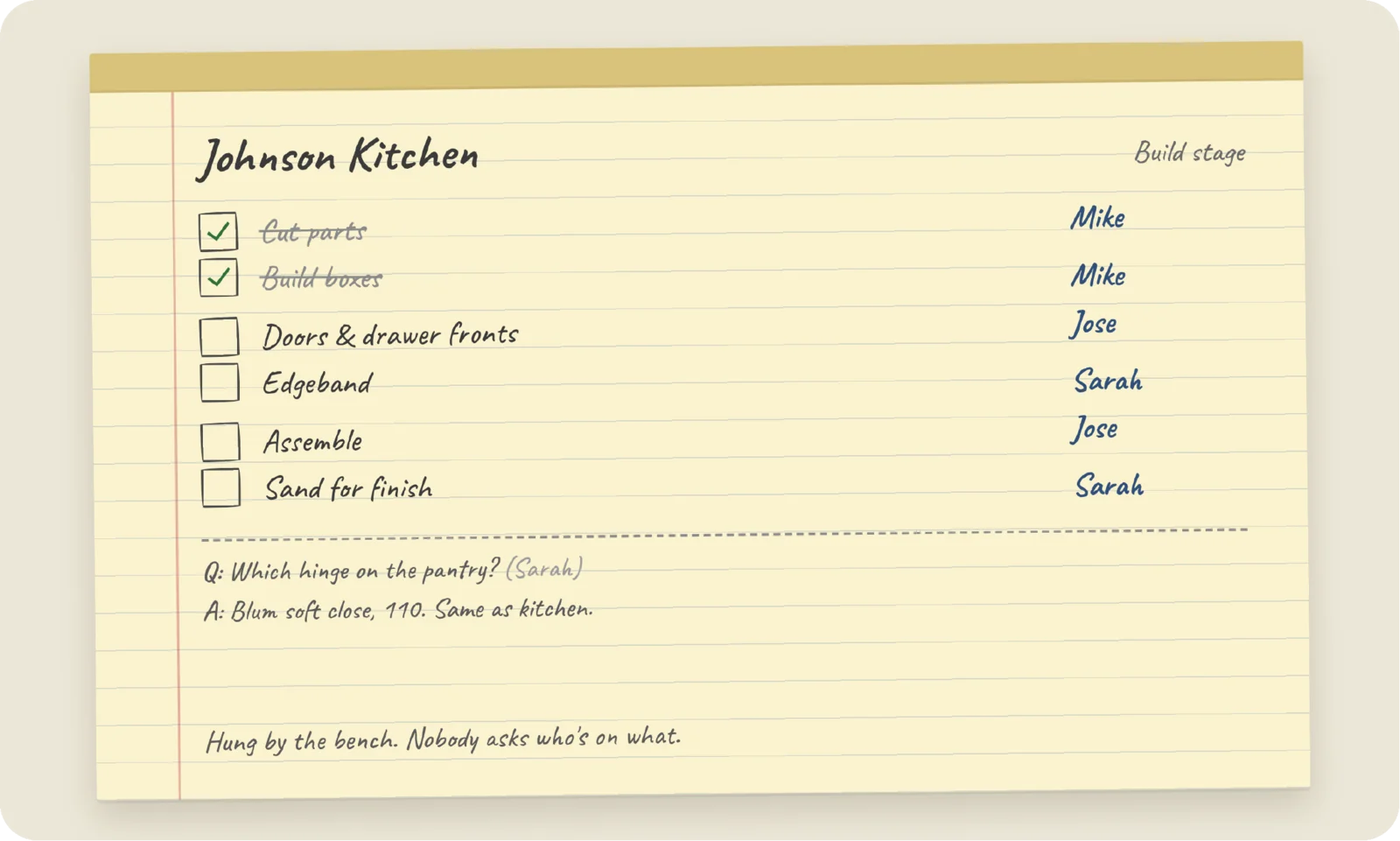
Put a name next to each item. Check it off when it's done.
This isn't paperwork. It's making sure the job doesn't depend on anyone's memory. Including yours.
The trouble is a checklist has to stay current. When three people are working the same job, keeping everyone on the same copy gets hard fast.
The Maestro way
Every job has its own tasks, organized around the work your shop does.
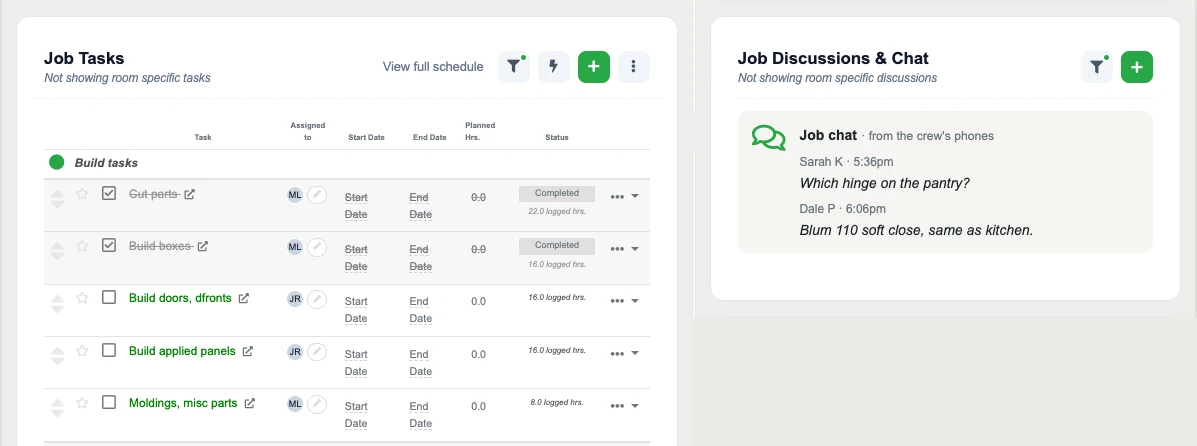
Set up default tasks and the important steps are already there the moment a new job is added.
Assign them. Give them due dates. Check them off from the phone as the work gets done.
Job Discussions keep the questions and decisions attached to the job, instead of in a text thread.
Instead of running jobs in your head at midnight, open the job and look. What's done is done. What's left is right there.
How to keep cabinet jobs organized
The result
Less uncertainty about what's next.
The crew knows what's expected. The small stuff stops slipping. And you find the open items before they become a problem, not after.
Credit card required. Nothing is charged for 14 days. Cancel before then and you owe nothing. On day 15 your plan starts at $199 a month.